


Page 2 - reflections_newsletter10
P. 2
REFLECTIONS
                                                                                                                   Dyslipidaemia
     Dyslipidaemia Global Newsletter #10 2025


     The task force conducted a comprehensive review of major RCTs and meta-analyses published since the 2019 guidelines. Through
     systematic evaluation and consensus discussions, they identified key areas necessitating updates, including CV risk estimation, lipid-
     lowering therapies (LLTs), and specific patient populations such as those with hypertriglyceridaemia, lipoprotein(a) [Lp(a)] elevation, and
                                                                                                                   Dyslipidaemia
     human immunodeficiency virus (HIV) or cancer. While several new data-driven recommendations have been introduced, the overall
     risk classification framework remains mostly unchanged from the 2019 guidelines, with the exception of an “extreme risk” category, that
     acknowledges individuals with recurrent events or polyvascular disease may benefit from even lower LDL-C goals (Class IIb).

     A significant enhancement in risk stratification is the incorporation of the new Systematic Coronary Risk Evaluation 2 (SCORE2) and
     SCORE2-Older Persons (OP) algorithms, which estimate 10-year total CV risk (fatal and non-fatal events) in persons without known
     CV disease (CVD). Non-high-density lipoprotein cholesterol (non-HDL-C) is now used as an input in these algorithms, as opposed to
     total cholesterol level.


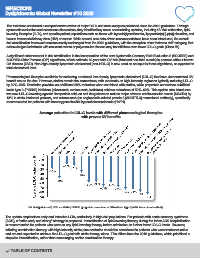
     Pharmacological therapies available for achieving a reduced low-density lipoprotein cholesterol (LDL-C) that have demonstrated CV
     benefit are on the rise. However, statins remain the cornerstone, with moderate- to high-intensity regimens typically reducing LDL-C
     by 30%–50%. Ezetimibe provides an additional 20% reduction when combined with statins, while proprotein convertase subtilisin/
     kexin type 9 (PCSK9) inhibitors (alirocumab, evolocumab, inclisiran) achieve reductions of 50%–60%. This update also introduces
     two new LDL-C-lowering agents: Bempedoic acid, an oral drug shown to reduce major adverse cardiovascular events (MACEs) by
     13% in statin-intolerant patients, and evinacumab (an angiopoietin-related protein 3 [ANGPTL3] monoclonal antibody), specifically
     recommended for patients with homozygous familial hypercholesterolaemia (HoFH).


                         Average reduction in LDL-C levels with different pharmacological therapies
                                                  with proven CV benefits


                  BA, bempedoic acid; EZE, ezetimibe; PCSK9, proprotein convertase subtilisin/kexin type 9; mAb, monoclonal antibody.

     The update emphasises early and intensive LLTs, particularly in high-risk populations. For patients with acute coronary syndrome
     (ACS), a “strike early and strong” strategy is proposed. Intensification of lipid-lowering therapy during the index ACS hospitalisation
     is recommended for patients who were on any lipid-lowering therapy before admission, to further lower LDL-C levels. However,
     initiating combination therapy with high-intensity statin plus ezetimibe should be considered in patients who were treatment-naïve
     and are not expected to achieve the LDL-C goal with statin therapy alone. This differs from the 2019 guidelines, which prioritised a
     stepwise intensification, rather than encouraging earlier combination therapy.


          TABLE OF CONTENTS

